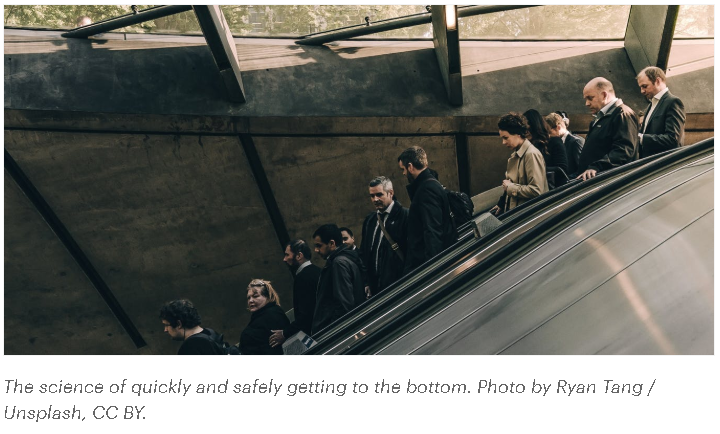
Love them or hate them, traffic laws exist to keep people safe and to help vehicles flow smoothly. And while they aren’t legally enforceable, pedestrian traffic also tends to follow its own set of unwritten rules.
Love them or hate them, traffic laws exist to keep people safe and to help vehicles flow smoothly. And while they aren’t legally enforceable, pedestrian traffic also tends to follow its own set of unwritten rules.

Everyone’s experience in retirement is unique. But there are some characterizations we can draw from data collected in various surveys and studies of retirees.

The Mythbusters managed to break the 7 fold barrier but they started with a piece of paper that was about half the size of a football field.
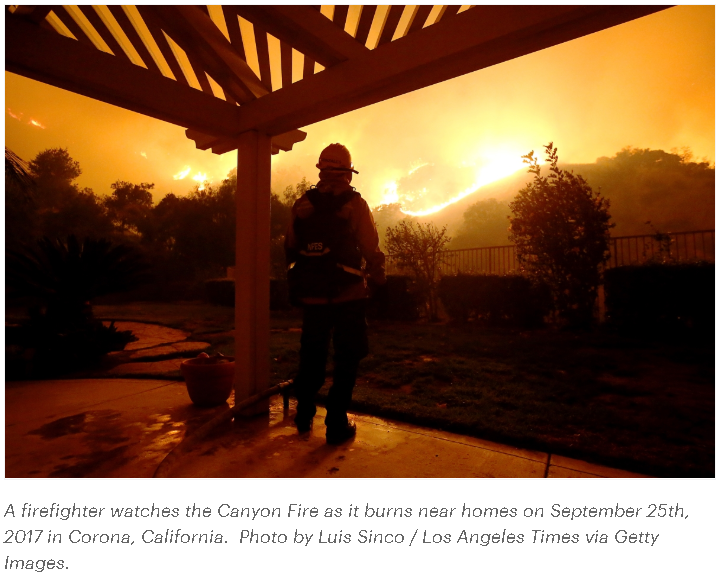
A thousand years from now, when some vaguely human-like machine digs through the ashes of the Twenty-First century and tries to figure out what happened to those once-thriving animals called Homo sapiens, it may be confused about why an intelligent species that could build rockets and write songs like “Imagine” couldn’t heed warnings of its own destruction. A key question for future historians of the universe: How stupid were those humans anyway?
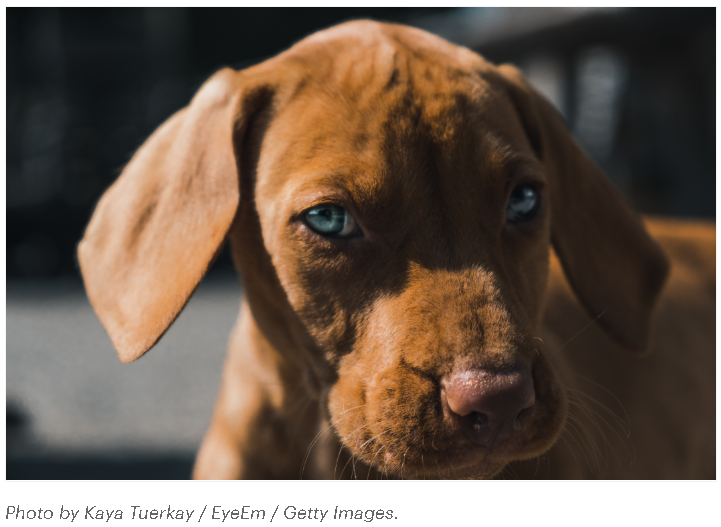
You know how your heart melts whenever a pup raises its eyebrows? That’s no accident. While research on non-human animals has long suggested that facial expressions are involuntary, it turns out dogs may be different, and like humans, able to control their facial expressions to get what they want. Are you really surprised?
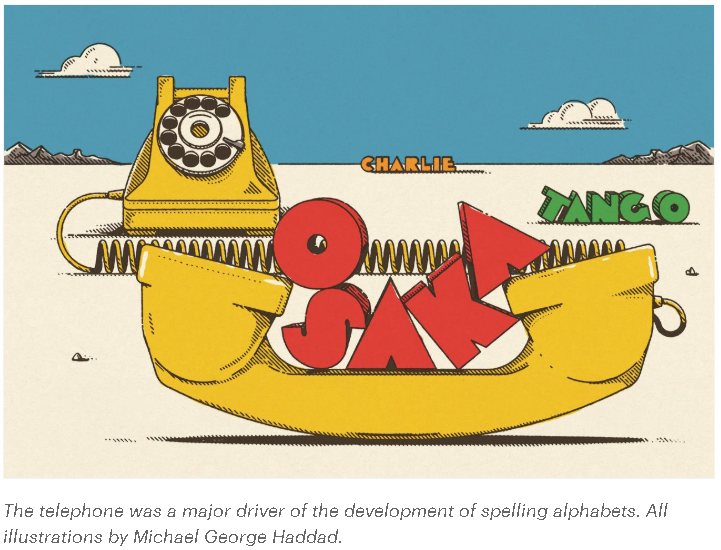
When someone on the phone—the doctor’s office, the bank, the credit card company—asks for my name, I always offer to spell it out—it’s a pretty uncommon surname. So far as I know, there are somewhere between 10 and 20 Nosowitzes in the world, and they’re all closely related to me. Because it’s uncommon, and because it would be a problem if my bank writes my name down as “Moskowitz,” I err on the side of caution. “N as in Nancy, O, S as in Samuel, O, W, I, T as in Thomas, Z as in Zebra,” I chant.
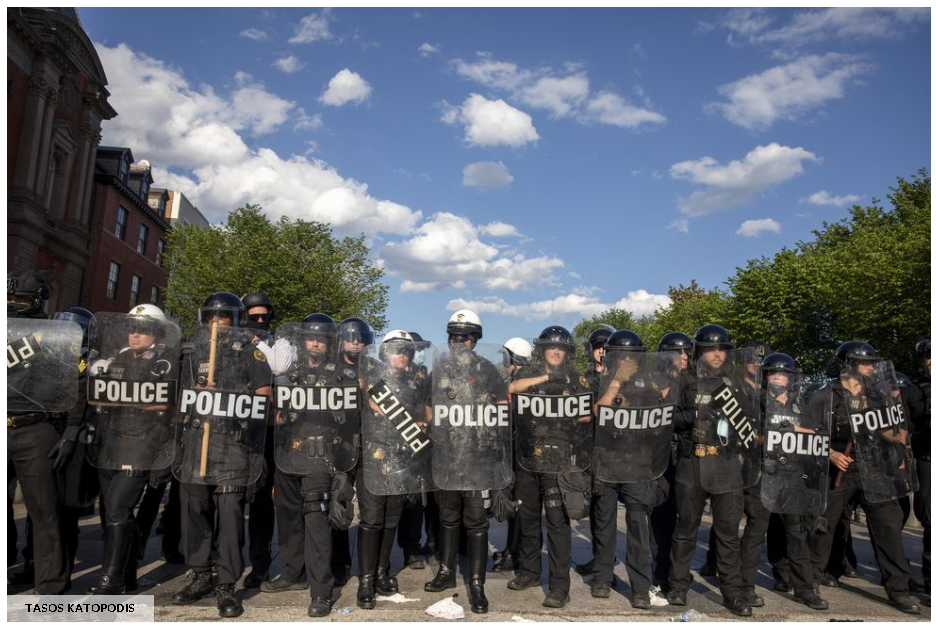
Several prominent academic mathematicians want to sever ties with police departments across the U.S., according to a letter submitted to Notices of the American Mathematical Society on June 15. The letter arrived weeks after widespread protests against police brutality, and has inspired over 1,500 other researchers to join the boycott.

As stay-at-home orders due to the ongoing pandemic have forced many of us to learn to love solitude and become reacquainted with our homes, one couple’s life has remained virtually unchanged.
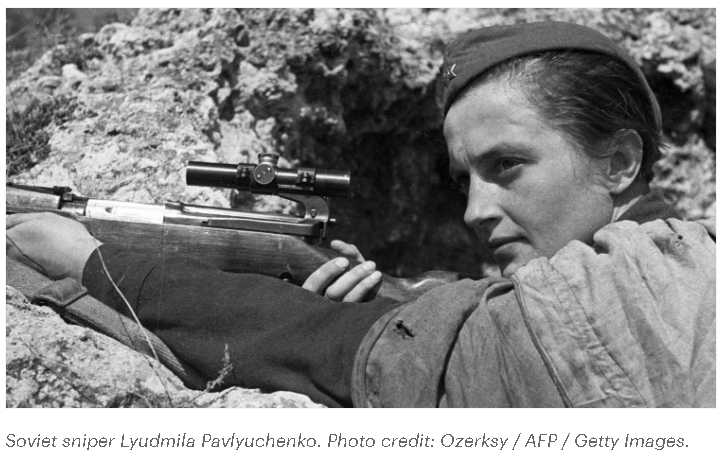
For Lyudmila Pavlichenko, killing Nazis wasn’t complicated. “The only feeling I have is the great satisfaction a hunter feels who has killed a beast of prey,” she once said of her job.
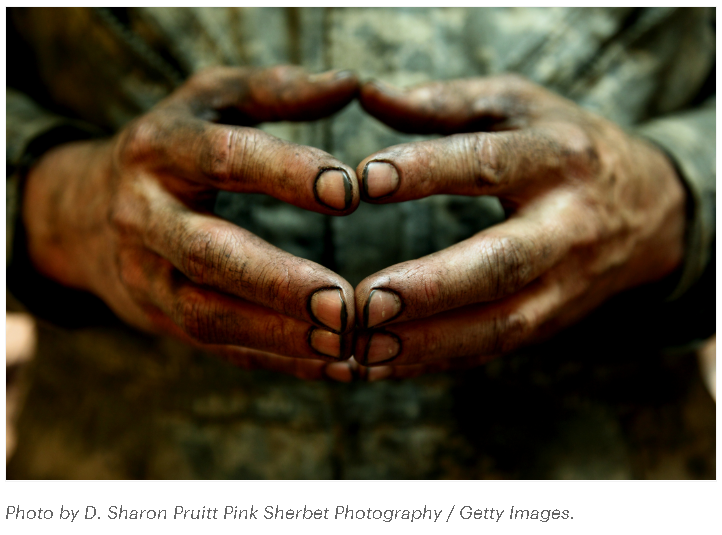
Meritocracy has become a leading social ideal. Politicians across the ideological spectrum continually return to the theme that the rewards of life – money, power, jobs, university admission – should be distributed according to skill and effort. The most common metaphor is the ‘even playing field’ upon which players can rise to the position that fits their merit. Conceptually and morally, meritocracy is presented as the opposite of systems such as hereditary aristocracy, in which one’s social position is determined by the lottery of birth. Under meritocracy, wealth and advantage are merit’s rightful compensation, not the fortuitous windfall of external events.